.svg)
.svg)
.svg)
8 Essential Steps for a Smooth SOX Compliance Audit
Prepare for SOX audits with a strong sox risk assessment, clear controls, documentation, and testing to ensure smooth 404 compliance and audit success.
Accorp Compliance Team
Our team of compliance experts specializes in PCI DSS, SOC 2, and other security frameworks to help businesses achieve and maintain compliance.
In today’s corporate landscape, financial transparency isn’t just a best practice — it’s a regulatory necessity. For organisations falling under the purview of the Sarbanes-Oxley Act (SOX), ensuring strong internal controls and accurate financial reporting is critical. A SOX audit plays a central role in confirming that your company is compliant, efficient, and trustworthy in the eyes of regulators and investors.
If you're getting ready for your next audit or looking to implement SOX 404 requirements, this guide will walk you through the essential steps.
What Is a SOX Audit?
A SOX audit is an independent examination of a company’s internal controls and financial statements. The audit is required annually for public companies and is designed to ensure that financial data is accurate and that systems are in place to prevent fraud or significant misstatements.
Unlike regular financial audits, a SOX audit goes beyond reviewing numbers — it evaluates the systems, processes, and access controls that manage financial data. From IT infrastructure to workflow approvals, everything must be verifiable, secure, and aligned with SOX compliance requirements.
Why SOX Compliance Matters
Complying with SOX compliance requirements goes beyond satisfying regulators. It demonstrates to shareholders, investors, and partners that your organisation prioritises accountability and accuracy. For companies planning to go public or secure investment, a clean SOX 404 assessment can significantly boost credibility and valuation.
Even private companies are increasingly asked to show SOX-level documentation — especially by lenders, insurers, and prospective investors. In some cases, compliance evidence supports Model Audit Rule (MAR) obligations, so strong internal control design SOX MAR alignment can be advantageous.
Who Needs to Perform a SOX Audit?
While SOX primarily targets publicly traded companies in the U.S., several other types of organisations may be impacted:
Foreign companies listed on U.S. exchanges
Private companies preparing for an IPO
Companies with registered debt securities
Accounting firms or vendors providing services to SOX-covered entities
Insurance companies, particularly those with Model Audit Rule compliance needs
If you're unsure whether your business must meet SOX standards, Accorp can help assess your status and obligations through a focused SOX risk assessment.
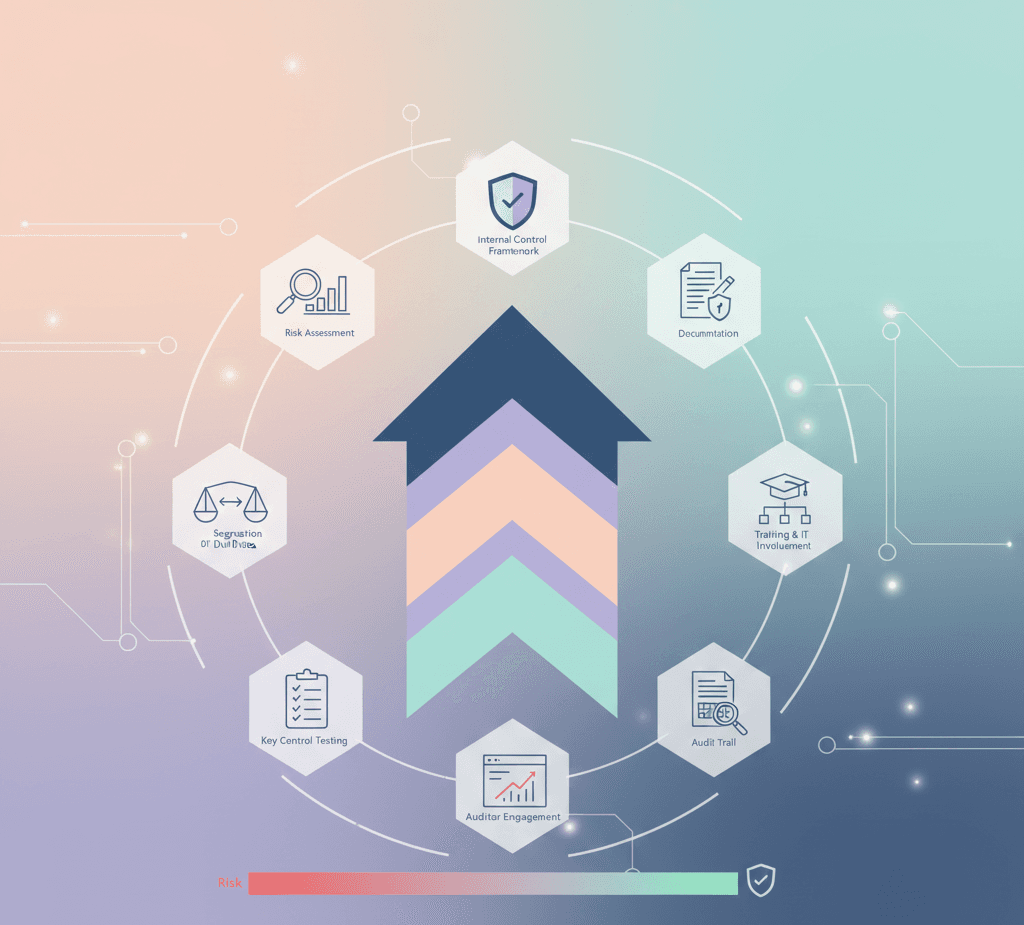
The 8-Step SOX Audit Process
Preparing for a SOX audit involves a structured and detailed process. Here's how most companies can expect it to unfold:
1. Risk Assessment
Every audit begins with a SOX risk assessment to identify where financial misstatements or fraud could occur. This step evaluates business processes, access permissions, and system vulnerabilities that could affect financial accuracy.
2. Materiality Determination
Auditors determine which financial items are “material” — those that could influence decisions if misstated. This analysis prioritises audit focus on areas that matter most to stakeholders.
3. Internal Control Review
Auditors evaluate internal controls tied to each material account. These controls might include approvals, system restrictions, or reconciliation steps. The aim is to verify that controls are properly designed (internal control design) and functioning as intended.
4. Fraud Risk Identification
Companies must show that fraud prevention is embedded in processes. Auditors assess fraud likelihood and whether controls can detect or deter illicit activity.
5. Documentation of Controls and Processes
Proper documentation is central to satisfying SOX 404 requirements. Companies must outline processes, control responsibilities, testing frequencies, and associated risks. Missing or inconsistent documentation is a frequent audit blocker.
6. Testing of Key Controls
Testing begins after documentation is in order. Activities include walkthroughs of transactions, system access reviews, staff interviews, and examination of audit trails. Key technical tests often include IT general controls testing (access controls, change management, backup/recovery) to validate system-level protections.
7. Deficiency Analysis
If weaknesses are found, they must be classified and remediated. This phase of the SOX 404 assessment determines whether issues are isolated control deficiencies, significant deficiencies, or material weaknesses that require disclosure.
8. Final Reporting
A comprehensive SOX report is prepared and presented to the audit committee or board. It includes findings, control effectiveness, deficiencies, and management’s remediation plans — the culmination of the SOX 404 internal audit lifecycle.
When Should a Private Company Perform a SOX Audit?
Even if SOX doesn’t legally apply to your business today, you should consider SOX-style work if:
You’re preparing for an IPO or M&A transaction
An investor, lender, or insurer requires certified financial statements
You’re partnering with publicly traded companies
You’re subject to internal control design SOX MAR, or similar regulatory expectations
Proactively conducting a SOX 404 risk assessment reduces future compliance costs and accelerates readiness.
Streamline SOX with Automation
Manual processes significantly increase audit effort and risk. Many companies deploy compliance platforms to automate control monitoring and documentation. These tools often integrate with core financial systems to provide:
Detection of segregation-of-duties violations
Real-time transaction monitoring
Automated SOX 404 internal audit reporting
Risk prioritisation tied to financial impact
At Accorp, we help clients integrate automation tools and guide SOX type 2 readiness activities — ensuring that both design and operational effectiveness are covered.
Why Accorp?
Navigating SOX can be complex — but it doesn’t have to be overwhelming. At Accorp, we specialise in helping companies build and maintain a strong internal control environment aligned with SOX compliance requirements. From planning a SOX risk assessment to conducting remedial action post-audit, our team supports you through every phase of the SOX 404 assessment and SOX 404 internal audit process.