.svg)
.svg)
.svg)
SOX Audit Survival Guide: Tips, Tools, and Best Practices
Master sox compliance requirements with tips for audits, 404 assessments, controls, documentation, and risk management to ensure smooth SOX readiness.
Accorp Compliance Team
Our team of compliance experts specializes in PCI DSS, SOC 2, and other security frameworks to help businesses achieve and maintain compliance.
Publicly traded companies in the U.S. must comply with the Sarbanes-Oxley Act (SOX) to ensure transparency and accountability in financial reporting. A SOX audit is an essential component of this compliance, and it plays a key role in validating the strength of your organisation’s internal controls and SOX compliance requirements.
Whether you're approaching your first audit or strengthening ongoing compliance efforts, understanding SOX 404 requirements is crucial. This article outlines how to effectively prepare for a SOX 404 assessment, ensure proper documentation, and pass your next SOX audit with confidence.
What Is the Purpose of a SOX Audit?
The main goal of a SOX audit is to confirm the accuracy and reliability of a company’s financial statements through the review of internal controls. During the audit, an external auditor will assess whether financial processes are working as intended to detect or prevent errors and fraud — part of the broader SOX risk assessment process.
Who Can Perform a SOX Audit?
A SOX compliance audit must be performed by an independent external auditor. These auditors are required to follow guidelines set by the Public Company Accounting Oversight Board (PCAOB).
Although internal audit teams can conduct pre-assessments or monitor controls throughout the year, only an external auditor can deliver the official audit opinion needed for compliance. However, internal teams often conduct a SOX 404 internal audit to prepare for the official review.
What Are the SOX 404 Requirements?
Section 404 of the Sarbanes-Oxley Act is arguably the most complex and critical. It requires:
Management to assess and report on the effectiveness of internal controls over financial reporting
Independent auditors to review and attest to management’s assessment
This is often referred to as the SOX 404 assessment, and it’s a major focus area in every SOX audit. This includes both a SOX 404 risk assessment and testing internal controls through IT general controls testing and other audit components.
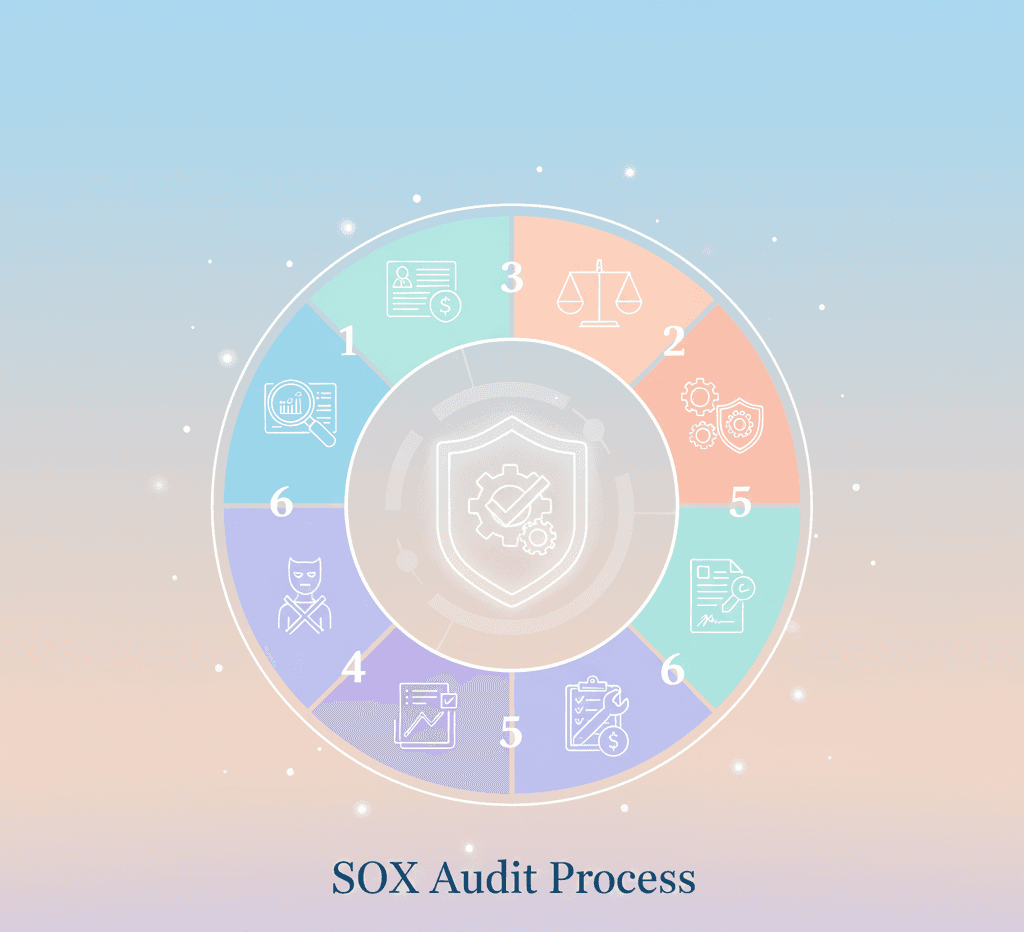
Key Steps to Prepare for a SOX Audit
1. Establish an Internal Control Framework -
A strong internal control environment is foundational to SOX compliance requirements. Companies typically use frameworks such as:
COSO (Committee of Sponsoring Organisations) for general internal controls
COBIT (Control Objectives for Information and Related Technologies) for IT governance
This structure should include policies for financial reporting, role-based access, and change management procedures to safeguard data integrity — all essential elements of strong internal control design SOX maturity.
2. Involve Your IT and Security Teams -
Today’s financial systems are tech-driven, so SOX auditors will review your IT infrastructure. Involving IT early ensures that digital controls such as encryption, multi-factor authentication, and system access logs are aligned with SOX 404 requirements. This is reinforced through thorough IT general controls testing before your official review.
3. Document Policies, Procedures, and Changes -
Maintain up-to-date records of all internal processes that affect financial reporting. Document any changes made throughout the year, including updates to accounting systems, management structure, or reporting processes — especially important for SOX type 2 audits, which focus on operating effectiveness over time.
4. Educate and Train Employees -
Staff must understand what SOX compliance requirements entail and how they apply to their roles. Regular training helps employees recognise risks, follow proper protocols, and reduce the likelihood of unintentional non-compliance.
5. Segregate Duties Across Teams -
A key principle in SOX risk assessment is segregation of duties (SoD). No single individual should have end-to-end control over financial transactions. For example, the employee who approves invoices should not also process payments or reconcile accounts — a common control tested under SOX 404 internal audit procedures.
6. Maintain a Comprehensive Audit Trail -
All financial activity should be logged and traceable. An audit trail includes:
Journal entries
Authorization records
System logs
Change management approvals
A clean, complete audit trail helps you quickly respond to auditor questions and demonstrates your readiness for the SOX 404 assessment.
7. Engage Early With External Auditors -
Don’t wait until the last minute. Initiate a planning meeting with your external auditors well in advance of the audit period. Provide them with a preliminary document package and request a SOX compliance checklist to identify any gaps.
Ongoing communication helps avoid surprises and keeps everyone aligned on audit timelines and expectations.
Preparing for a SOX audit doesn’t have to be overwhelming. By understanding SOX 404 requirements, maintaining detailed records, conducting effective SOX 404 risk assessment, and involving the right stakeholders, your company can reduce risk and ensure a successful SOX 404 internal audit and external review.
Let strong internal control design and collaborative audit readiness be your guide to lasting compliance — not just for today, but for every annual SOX type 2 assessment moving forward.