.svg)
.svg)
.svg)
Understanding CDSCO’s Medical Device Reclassification: What Manufacturers Need to Know in 2025
Learn how CDSCO’s 2025 reclassification impacts ISO 13485 certification cost medical device compliance and what manufacturers must do to stay aligned.
Accorp Compliance Team
Our team of compliance experts specializes in PCI DSS, SOC 2, and other security frameworks to help businesses achieve and maintain compliance.
Why Reclassification Is a Big Deal
India’s medical device industry is growing rapidly — from surgical instruments and implants to AI-driven diagnostic tools. To keep pace with technological advances and ensure patient safety, the Central Drugs Standard Control Organization (CDSCO) is reclassifying over 1,100 medical devices under the Medical Device Rules (MDR) 2017.
This reclassification aims to create more uniform, risk-based regulation and align Indian standards with global norms. But for manufacturers, it also means adapting to new compliance requirements that may affect licensing, documentation, and market access.
What the Reclassification Means
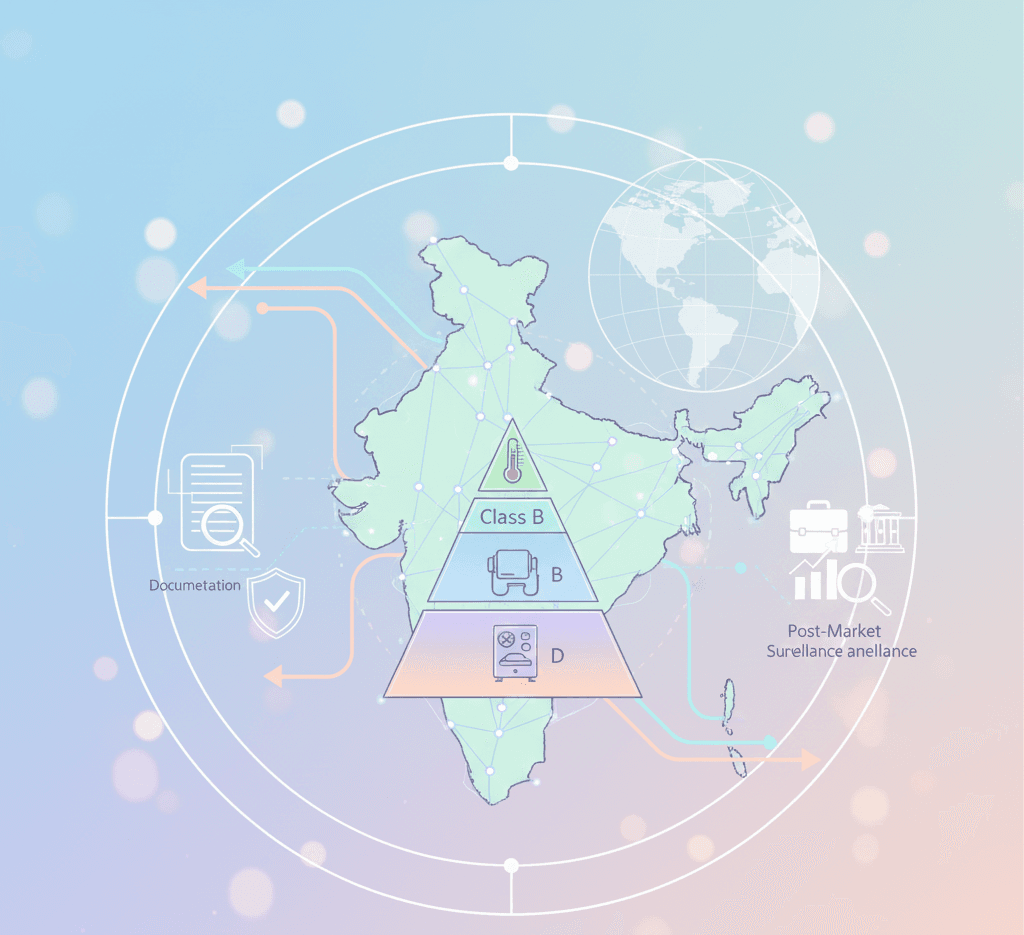
Under the updated system, CDSCO is categorising devices into Class A, B, C, and D, based on their intended use and potential risk to patients:
Class A: Low-risk devices (e.g., stethoscopes, thermometers)
Class B: Low to moderate risk (e.g., infusion sets, blood pressure cuffs)
Class C: Moderate to high risk (e.g., ultrasound scanners, ventilators)
Class D: High risk (e.g., heart valves, implantable pacemakers)
The reclassification includes areas like interventional radiology, oncology, and radiotherapy devices, as well as numerous Class A non-sterile and non-measuring products that were previously less regulated.
Why CDSCO Is Doing This
The Indian MedTech sector is expected to reach $50 billion by 2030, and CDSCO’s reclassification is designed to:
Strengthen patient safety through better oversight of higher-risk devices
Eliminate grey areas by clearly defining device categories
Streamline approval processes with more transparent licensing paths
Facilitate international recognition by aligning India’s system with ISO and IMDRF standards
This move ensures that both Indian and foreign manufacturers operate under clear, consistent regulatory expectations.
How It Impacts Manufacturers
If your device’s classification changes, you may need to:
Update Regulatory Filings – Revise device dossiers, labelling, and test reports as per the new classification.
Conduct Additional Testing – Higher-risk devices (Class C or D) may require new biocompatibility or clinical evaluation data.
Revise Quality Systems – Implement stronger quality management systems (QMS) like ISO 13485:2016.
Engage a Notified Body – Certain classes now require third-party conformity assessments.
Review Import Licenses – Importers must check if their devices fall under new licensing conditions.
Steps to Prepare for Compliance
To stay compliant and avoid business disruption, manufacturers should:
Map Devices to New Classes – Review the updated CDSCO list and determine which class applies.
Audit Existing Technical Files – Ensure your documentation matches the new risk level.
Engage Regulatory Experts – Seek professional support to handle filings and audits efficiently.
Plan for Renewals – Start renewal processes early to avoid licensing delays.
Stay Informed – Monitor CDSCO notifications for clarifications and guidance updates.
India’s Global Regulatory Alignment
India’s reclassification initiative mirrors practices in the EU MDR, US FDA, and Australia TGA, promoting smoother export pathways. For Indian manufacturers, this alignment enhances credibility and opens doors to global markets.
The CDSCO’s evolving framework reflects India’s ambition to become a global MedTech innovation and manufacturing hub while safeguarding patient safety.
Conclusion: A Smarter, Safer Future for Indian MedTech
The reclassification of medical devices by CDSCO is a transformative step toward regulatory clarity, innovation, and international competitiveness. Manufacturers who act early, adapt their documentation, and align with quality standards will be best positioned to thrive in this new regulatory landscape.