.svg)
.svg)
.svg)
C5 Attestation Explained: Why It’s Critical for Cloud Compliance
Understand C5 attestation, audit types, and how a C5 SOC 2 readiness assessment helps you prepare for secure, compliant, and trusted cloud operations.
Accorp Compliance Team
Our team of compliance experts specializes in PCI DSS, SOC 2, and other security frameworks to help businesses achieve and maintain compliance.
As cyber threats evolve—from vishing scams and Zoom bombings to attackers exploiting remote work vulnerabilities—securing cloud infrastructure is no longer optional. Organisations worldwide are migrating to the cloud to enable hybrid work, accelerate digital transformation, and enhance collaboration. But with the surge in cloud platforms and rising data privacy concerns, choosing a trustworthy cloud service provider (CSP) is critical.
What is C5?
The Cloud Computing Compliance Criteria Catalogue (C5) is a cybersecurity attestation framework introduced by Germany’s Federal Office for Information Security (BSI). Designed specifically for cloud service providers, the BSI C5 certification outlines a comprehensive set of controls that help CSPs demonstrate their ability to secure cloud environments effectively and transparently.
The five “C”s in C5 stand for:
Cloud
Computing
Compliance
Controls
Catalogue
Introduced in 2016 and updated since, C5 certification is now widely adopted by CSPs across Europe and beyond as a mark of trust and maturity in cloud security.
Why Does the C5 Attestation Exist?
The goal of C5 attestation is to provide clarity and transparency for organisations using cloud services. As businesses shift from traditional infrastructure to cloud-based models, there’s a growing need for accountability and assurance around data protection and service reliability. The C5 compliance framework helps cloud users evaluate whether a provider meets high security benchmarks by covering areas such as:
User authentication and access control
Data availability and reliability
Transaction and change monitoring
Protection against cyberattacks
Secure and well-managed operational workflows
Who Needs C5 Compliance?
Originally mandated in Germany for cloud providers serving government agencies, C5 cloud compliance is now gaining traction in the private sector. Global CSPs pursue BSI C5 certification to build customer trust and support international expansion—especially within Europe. Regulated industries like finance, healthcare, and insurance find C5 particularly valuable, though C5 certification is relevant to any organisation seeking verifiable cloud security assurances.
Why C5 Matters for European Operations
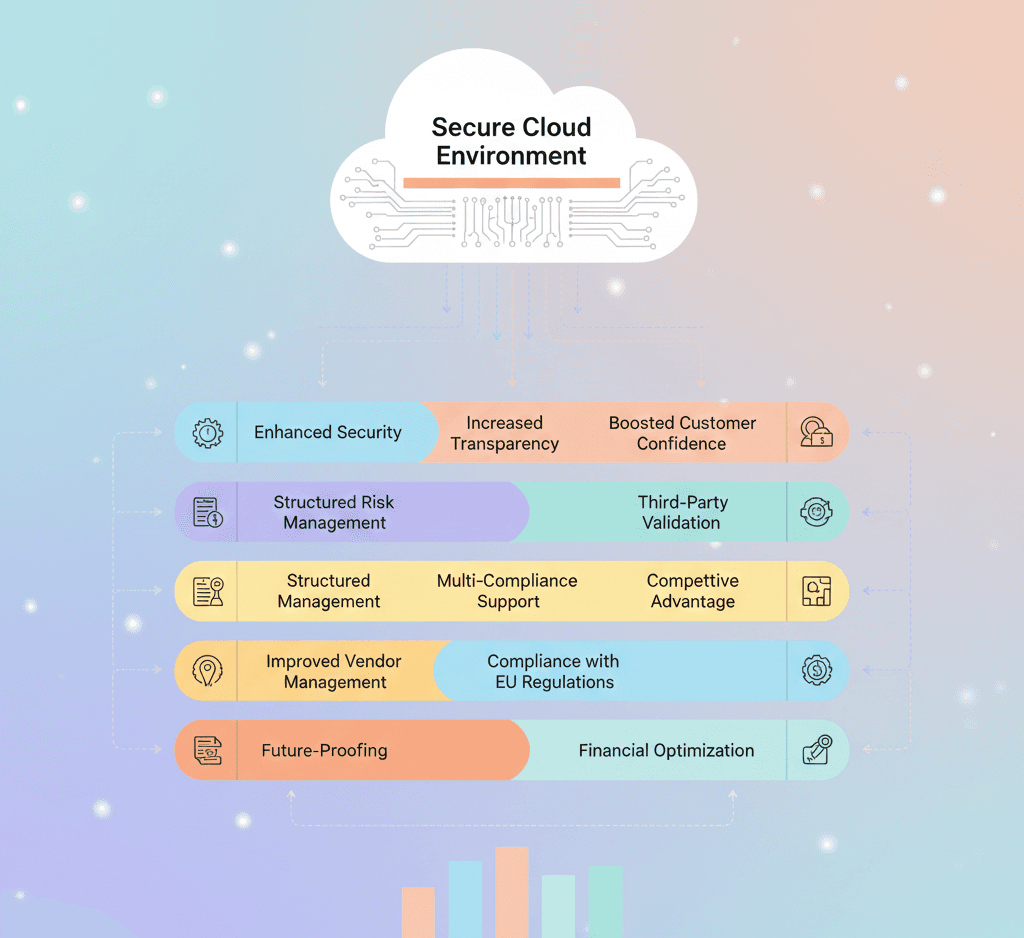
If your business operates in or serves customers across Europe, working with a C5-certified cloud provider gives you:
Greater transparency into the provider’s security controls
Assurance that your data is handled in line with strict EU standards
A competitive edge during procurement and vendor due diligence
As data-protection rules tighten, demonstrating C5 cloud compliance can help reduce legal, financial, and reputational risks.
The C5 Attestation Process & Audit Types
A formal C5 attestation process follows recognised assurance standards (commonly ISAE 3000 C5 engagements) and typically supports two audit types:
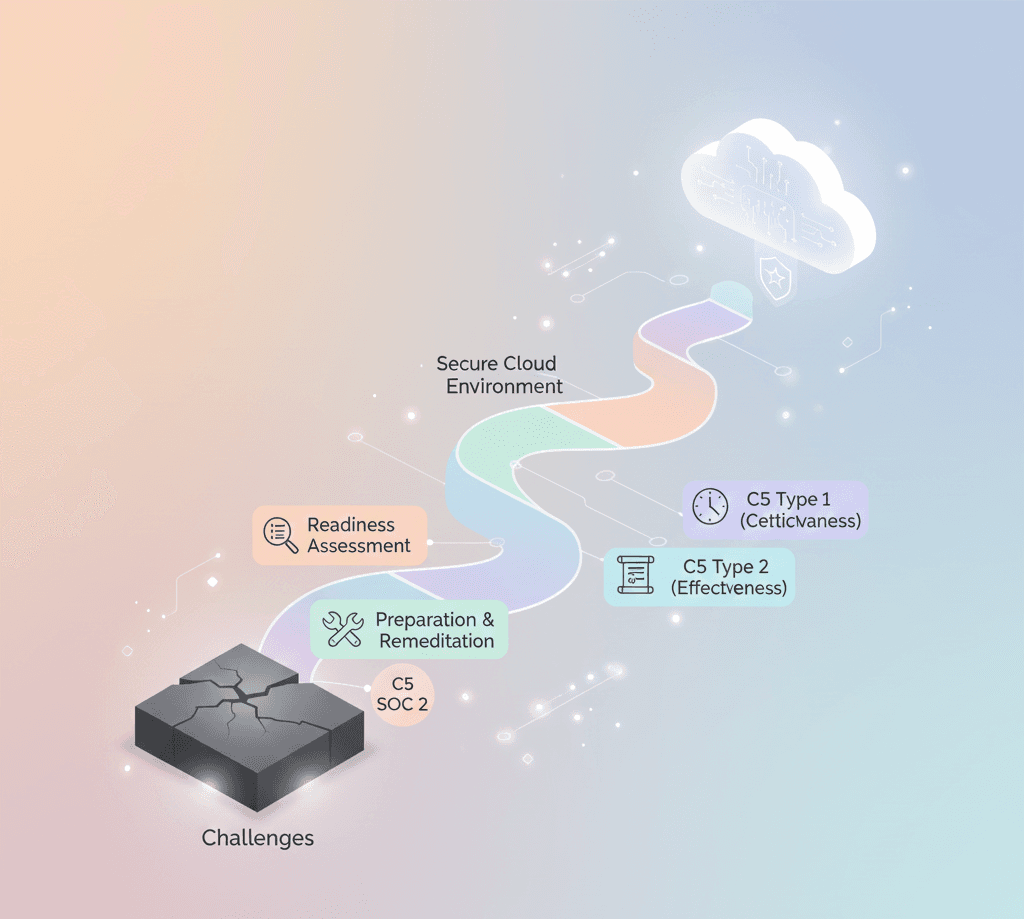
C5 Type 1 (Design Only): Evaluates the design and documentation of controls at a specific point in time—useful for demonstrating control intent.
C5 Type 2 (Design + Operating Effectiveness): Tests whether controls operate effectively over a defined period (often 6–12 months). Because Type 2 demonstrates operational evidence, many enterprise customers and regulators increasingly require C5 Type 2 certificates.
Understanding C5 Type 1 vs Type 2 early helps you plan evidence collection, logging, and monitoring activities needed for a successful audit.
Practical Path: SOC 2 + C5 Readiness
Many organisations run a combined C5 SOC 2 readiness assessment to map existing SOC 2 controls to the C5 catalogue. This approach reduces duplicate evidence collection and accelerates readiness for either a C5 attestation or an integrated SOC 2 + C5 audit. A typical roadmap includes readiness assessment, remediation, Type 1 testing (optional), and then Type 2 for full operational assurance.
Platform-Specific Considerations (e.g., BSI C5 AWS)
If you operate on major hyperscalers, platform-specific attestations—such as BSI C5 AWS—and region-based compliance artefacts can simplify your path to C5 cloud certification. Map your cloud architecture to C5 controls, leverage provider attestations under the shared responsibility model, and prepare documentation demonstrating data residency and configuration controls.
How Accorp Supports Your C5 Journey
At Accorp, we help CSPs and cloud consumers at every stage of the C5 attestation process:
Conduct C5 SOC 2 readiness assessments and gap analyses
Map controls and prepare evidence for ISAE 3000 C5 engagements
Support remediation and control hardening for C5 Type 2 readiness
Coordinate audit execution and manage the attestation lifecycle
Advice on platform-specific proofs (e.g., BSI C5 AWS) and data residency compliance
Future-Proof Your Cloud Strategy with C5
Cloud security is continuous—C5 cloud compliance is not a one-off checkbox. Regular reassessments, operational monitoring, and timely recertification keep your environment resilient and trusted. Whether you aim for a fast Type 1 demonstration or a comprehensive C5 Type 2 certification, a structured readiness program is essential.
Ready to Start Your C5 Certification?
If you’re preparing for C5 certification, planning a C5 SOC 2 readiness assessment, or need help navigating the C5 attestation process, Accorp can guide you. We’ll assess your current posture, map controls to the BSI C5 requirements, and build a practical path to certification—so you can win regulated customers and scale confidently.