.svg)
.svg)
.svg)
C5 Compliance Without the Stress: How to Prepare Like a Pro
Prepare for C5 cloud compliance with expert tips on readiness, C5 Type 1 vs Type 2, SOC 2 alignment, and steps to achieve strong cloud security.
Accorp Compliance Team
Our team of compliance experts specializes in PCI DSS, SOC 2, and other security frameworks to help businesses achieve and maintain compliance.
As cloud adoption accelerates globally, ensuring a secure cloud environment is now more crucial than ever. For Cloud Service Providers (CSPs), especially those operating within the European Union or serving EU-based clients, achieving C5 cloud compliance is not just a recommendation—it's a competitive necessity.
What Is C5 Attestation?
C5 stands for the Cloud Computing Compliance Criteria Catalogue, developed by the German Federal Office for Information Security (BSI). First introduced in 2016, BSI C5 certification offers a robust security baseline by integrating elements from globally recognised frameworks such as ISO 27001, ISO 27002, ISO 27017, and the Cloud Security Alliance (CSA) Cloud Control Matrix (CCM). This unique blend makes C5 certification ideal for organisations looking to ensure a high level of transparency and trust in cloud services.
Why C5 Compliance Matters
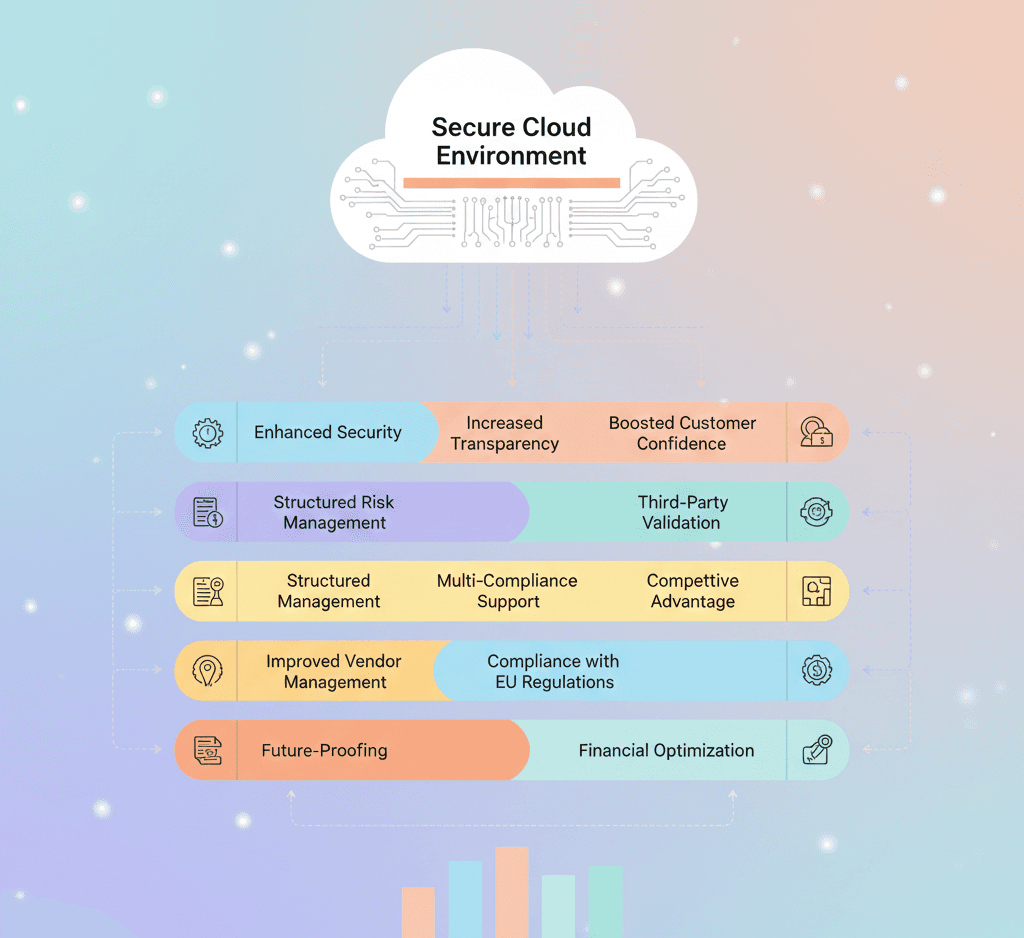
CSPs that achieve C5 attestation demonstrate their commitment to cloud security and data protection. This is especially important in regulated sectors like healthcare, finance, and government, where data sovereignty and protection are legally enforced. C5 compliance not only helps CSPs gain a competitive edge but also builds trust with customers concerned about security and privacy.
5 Practical Tips to Prepare for C5 Certification
1. Conduct a Readiness Assessment - Start with a gap or readiness assessment that benchmarks your controls against the C5 catalogue—this is often called a C5 SOC 2 readiness assessment when performed alongside SOC 2 mapping. A good readiness assessment prevents surprises during the formal C5 attestation process.
2. Allow Ample Time for Preparation and Remediation - The controls in the C5 catalogue can be strict. Allocate sufficient time to:
Review applicable controls
Implement necessary changes
Train personnel on new security responsibilities
Document exceptions clearly for auditors
3. Choose the Right Scope and Control Level - C5 assessments allow CSPs to be evaluated against ‘basic’ or ‘additional’ requirements. Work with customers and stakeholders to select a scope that meets their assurance expectations and aligns with your business model.
4. Work with a Qualified C5 Auditor - Ensure your audit firm is experienced with ISAE 3000 C5 engagements and familiar with relevant AT-C guidance. Qualified auditors will guide you through the C5 attestation process, whether you pursue C5 Type 1 vs Type 2.
5. Stay Informed on BSI Updates - C5 is evolving. For example, recent changes require Type 2 certificates for certain data classes starting July 2025. Monitor the BSI guidance and update your roadmap for C5 cloud certification accordingly.
C5 and SOC 2: A Dual Approach
If you’re already planning a SOC 2 audit, consider combining it with C5 certification. A combined C5 SOC 2 readiness assessment and coordinated audit effort reduces duplicate evidence collection and accelerates overall compliance. Many CSPs choose the joint path to streamline efforts toward C5 attestation and SOC 2 reporting.
Understanding the C5 Attestation Types
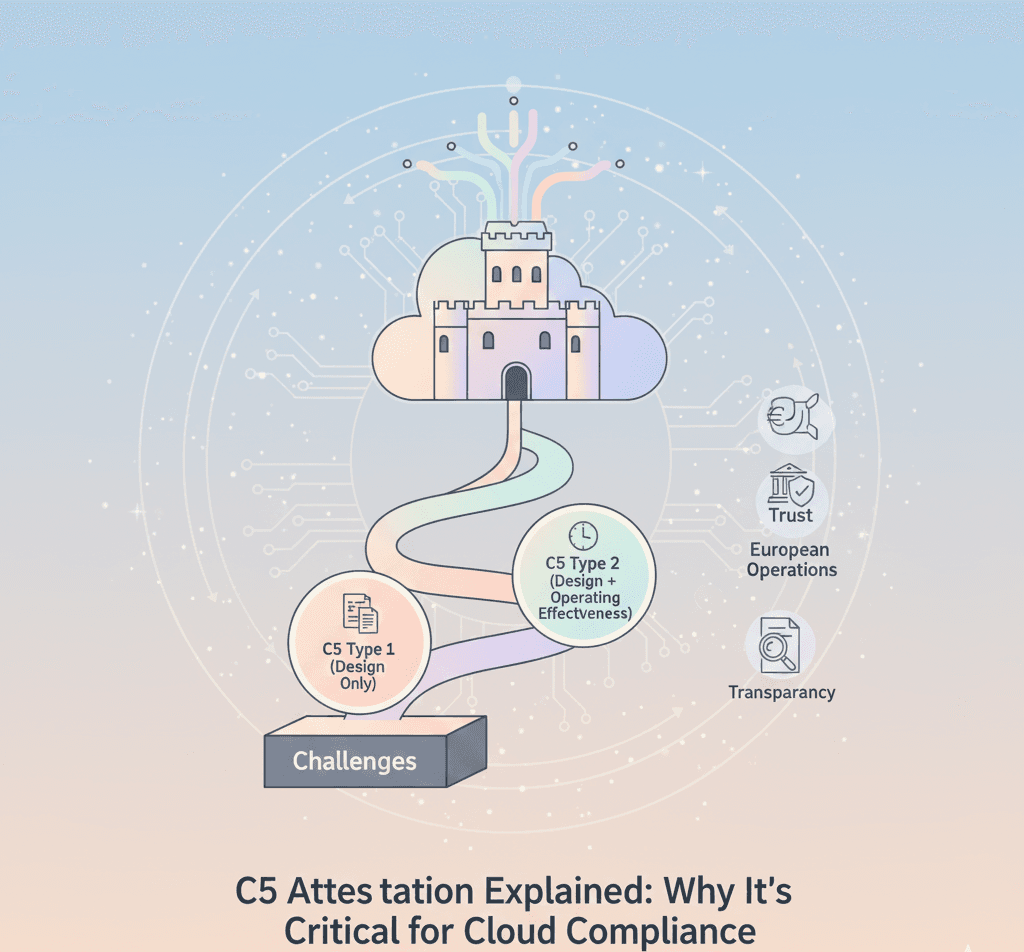
C5 Type 1 (Design Only): Evaluates whether controls are suitably designed at a point in time—useful for demonstrating control intent.
C5 Type 2 (Design + Operating Effectiveness): Tests how controls operate over a period (commonly 6–12 months) and is increasingly required by enterprise customers and regulators.
Knowing the difference between C5 Type 1 vs Type 2 early helps plan evidence collection, logging, and monitoring activities required for successful certification.
Regional and Platform Considerations (e.g., BSI C5 AWS)
If your service runs on major hyperscalers, be prepared to show platform-level evidence. Examples such as BSI C5 AWS demonstrate how AWS-native features and artefacts can be mapped to C5 controls—useful for proving shared-responsibility alignment and data residency assurances.
Roadmap to C5 Cloud Compliance
A practical roadmap to achieving C5 cloud certification typically includes:
Gap assessment (including a C5 SOC 2 readiness assessment if applicable)
Remediation plan and control implementation
Evidence collection and operational monitoring for Type 2 readiness
Formal ISAE 3000 C5 audit and C5 attestation execution
Ongoing maintenance, surveillance, and recertification planning
Why Work with Accorp?
Accorp supports CSPs through every stage of C5 cloud compliance—from readiness assessments to the final C5 attestation process. Our services include:
ISAE 3000 C5 advisory and audit coordination
SOC 2 + C5 control mapping and remediation planning
Evidence collection and Type 2 readiness support for C5 Type 1 vs Type 2 timelines
Platform-specific guidance (e.g., BSI C5 AWS) and data residency advice
Conclusion
Achieving BSI C5 certification is a strategic advantage for CSPs operating in or serving the EU. Whether you aim for a rapid C5 Type 1 demonstration or full operational assurance via C5 Type 2, a well-planned C5 attestation process—backed by a thorough readiness assessment—ensures you meet regulatory expectations and market demands with confidence.