.svg)
.svg)
.svg)
12 Months of GDPR: Key Insights, Trends, and Enforcement Stats
Explore GDPR’s first-year trends, challenges, and enforcement while understanding how gdpr auditor certification supports stronger compliance programs.
Accorp Compliance Team
Our team of compliance experts specializes in PCI DSS, SOC 2, and other security frameworks to help businesses achieve and maintain compliance.
The General Data Protection Regulation (GDPR) recently celebrated its first anniversary since taking effect on May 25, 2018. This landmark European Union (EU) legislation redefined how companies collect, process, and protect user data. As one of the most significant global data privacy initiatives, gdpr compliance has impacted businesses far beyond Europe’s borders—including the United States, China, and elsewhere.
In this blog, we’ll explore the impact of GDPR, its key provisions, and how companies can stay compliant through modern solutions like gdpr compliance as a service.
What is the GDPR?
The GDPR was approved by the EU Parliament in 2016 and went into effect after a two-year transition period. Its goal is simple but powerful: to give users control over their personal data.
The Three Core Objectives of GDPR:
Protect user rights over personal data.
Modernise privacy laws to match today’s technology landscape.
Create uniform rules across EU member states.
Key GDPR Requirements
Any business that processes or stores data on EU citizens—regardless of where it is based—is subject to GDPR. Here are some critical components companies must address for gdpr compliance:
Consent: Clear, informed user consent is required before collecting personal data.
Documentation: Organisations must track what data they hold, where it came from, and how it’s used.
Data Access: Users can request a copy of their personal data. Companies must respond within 30 days.
Data Erasure: Users can request that their data be deleted, and businesses must comply.
Correction and Objection Rights: Users can request data corrections or object to profiling based on sensitive attributes.
The First-Year Impact of the GDPR
The GDPR has set a precedent globally, influencing other data privacy laws like the California Consumer Privacy Act (CCPA). Together, these regulations are driving a new era of gdpr ccpa compliance.
Key Stats from Year One:
$63 million in fines, including a $57 million fine to Google.
144,000 consumer complaints and 89,000 data breaches reported.
Over 500,000 Data Protection Officers (DPOs) are employed across industries.
Global companies spent over $9 billion on gdpr compliance preparation.
Only 50% of companies felt fully gdpr compliant by year’s end.
Despite the high cost and pressure, many businesses saw this first year as a grace period, with regulators offering warnings rather than harsh penalties—especially to those showing good-faith efforts toward gdpr attestation of compliance.
Challenges Faced by Businesses
For many organisations—especially small and mid-sized companies—adapting to GDPR was a significant challenge:
Average gdpr compliance cost per company: $1.3 million.
Additional spending expected: $1.8 million.
About 20% of companies chose not to comply and instead either cut ties with EU customers or deleted non-compliant data.
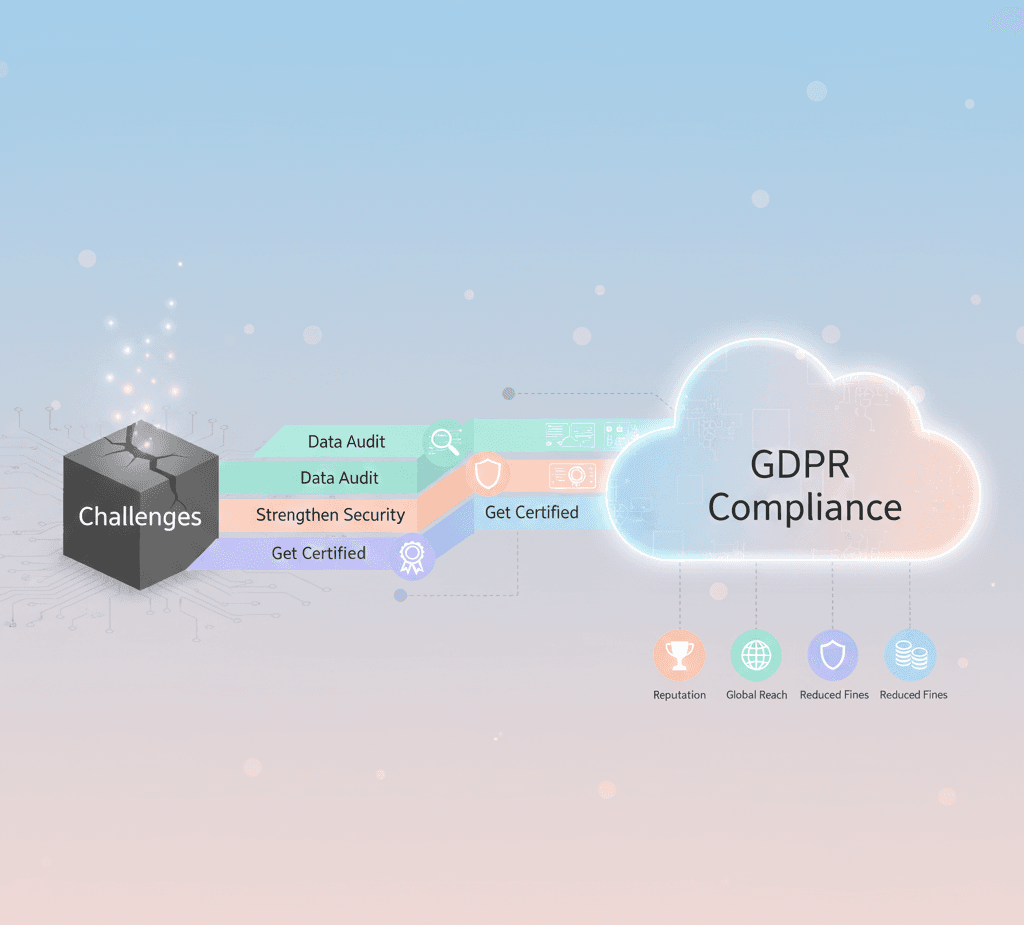
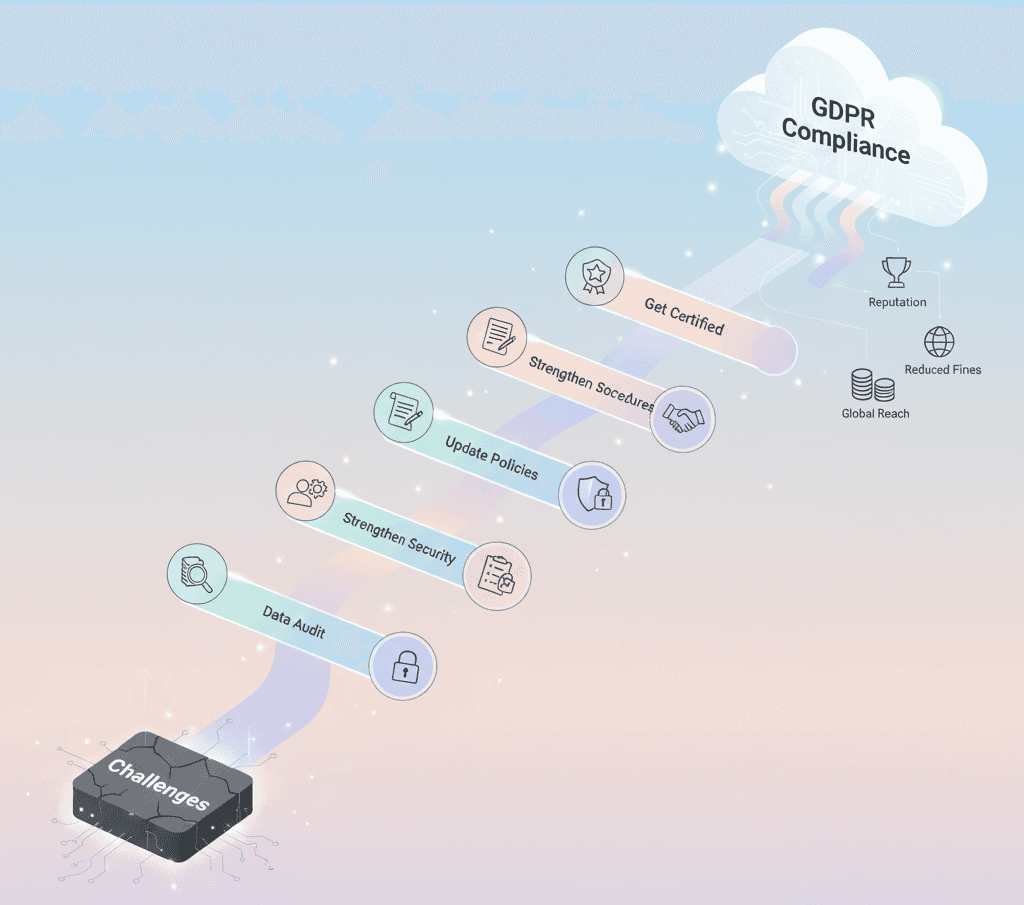
Larger corporations like Google and Facebook had the resources to absorb these costs, while smaller firms struggled with the legal complexity and budget demands. This highlights the need for solutions like gdpr compliance as a service, which allows companies to outsource the heavy lifting to certified experts, such as a gdpr auditor with gdpr auditor certification.
Ripple Effects on Marketing and Legal Teams
The GDPR also reshaped how marketers and legal departments operate:
40% of GDPR budgets were spent on legal advice and support.
52.8% of U.S. marketers expressed concern over how regulations could hinder data-driven strategies.
Marketers are now more cautious when using consumer data and must provide transparent privacy policies and consent forms in adherence with gdpr ccpa compliance.
The Role of Data Protection Officers (DPOs)
The GDPR requires many organisations to appoint a Data Protection Officer, a role that has seen explosive growth:
From 13 postings per million in 2016 to over 100 in 2017—a 700% increase.
Over 500,000 DPOs are now employed globally.
This demonstrates how gdpr attestation of compliance is no longer just a legal concern—it’s a full-time job and a key part of DPDPA global data protection strategies.
Consumer Sentiment: A Mixed Response
While GDPR gives users more control, public opinion remains split:
62% of UK consumers say they’re more comfortable sharing data post-GDPR.
But 45% of EU citizens still worry about data privacy.
Only 31% of users noticed an improved digital experience.
While awareness is growing, many consumers are still confused by the new data rights and how to exercise them. Similar sentiment is observed with India’s Data Protection Bill, making DPDPA risk assessment and DPDPA compliance services crucial for businesses expanding into global markets.
The Road Ahead: GDPR in the Future
The GDPR’s first year has laid the foundation for global privacy reform. Here's what the future holds:
Stricter Enforcement - Expect less leniency in future years. Regulators are ramping up efforts, including expanding staff and increasing penalties for non-compliance.
More Global Legislation - With the GDPR and CCPA paving the way, other countries and U.S. states are expected to follow with similar frameworks—including India’s DPDPA, propelling demand for DPDPA compliance services.
Bigger Budgets for Data Privacy - Businesses will continue allocating larger budgets for compliance, security, and DPOs.
Changes in Digital Marketing - The era of unchecked data collection is over. Marketers must adapt, embracing transparency and focusing on opt-in strategies.
Monetisation Models Will Shift - “Freemium” sites that rely on ad revenue from personal data may explore paid models to stay gdpr compliant.
Conclusion: Lessons from a Year of GDPR
While not perfect, GDPR is a vital step toward a more transparent, respectful, and secure digital world. Businesses must prioritize gdpr compliance not just to avoid fines, but to build trust and lead in a privacy-conscious era.
At Accorp, we help businesses simplify the process with tailored services, including gdpr compliance as a service, gdpr attestation of compliance, and certified gdpr auditor support—plus expertise in global frameworks such as DPDPA compliance services and DPDPA global data protection.