.svg)
.svg)
.svg)
Your Trusted Path to DORA Compliance: Strategies, Tools & Insights
Discover how DORA transforms financial resilience with dora cyber frameworks, risk management, testing, and third-party oversight for 2025 compliance.
Accorp Compliance Team
Our team of compliance experts specializes in PCI DSS, SOC 2, and other security frameworks to help businesses achieve and maintain compliance.
The Digital Operational Resilience Act (DORA) is reshaping how financial institutions across the EU approach cybersecurity and operational risk. Set to be enforced on 17 January 2025, this regulation introduces a harmonised framework addressing digital threats, operational disruptions, and third-party risks in financial services.
For organisations operating within or serving the financial sector, now is the time to prepare. This guide breaks down DORA’s purpose, core compliance pillars, and why achieving DORA compliance is critical in ensuring long-term DORA resilience.
What Is DORA?
The Digital Operational Resilience Act (DORA) is an EU regulation aimed at strengthening the ICT security and operational continuity of financial entities. It mandates uniform rules to ensure institutions can withstand, respond to, and recover from cyberattacks and digital disruptions, elevating DORA cybersecurity standards across the sector.
Who must comply with DORA?
Banks and investment firms
Insurance and reinsurance companies
Payment service providers
Crypto-asset service providers
Critical third-party ICT service providers (cloud platforms, infrastructure vendors, etc.)
DORA is considered a lex specialis to the broader NIS2 Directive—meaning where overlaps occur, DORA cyber regulations take precedence over general cybersecurity frameworks for the financial sector.
Why DORA Matters Now
The financial system is interconnected like never before, and a single ICT failure can cascade across multiple institutions and markets. The DORA Act EU aims to address these systemic risks by fostering consistent standards for cyber resilience.
Key Objectives of DORA:
Harmonise ICT risk requirements
Strengthen financial sector cybersecurity
Establish proactive DORA cyber practices
Boost trust among consumers and investors
Failure to comply with the DORA Act 2022 can lead to penalties, reputational damage, or operational suspension.
The Five Pillars of DORA Compliance
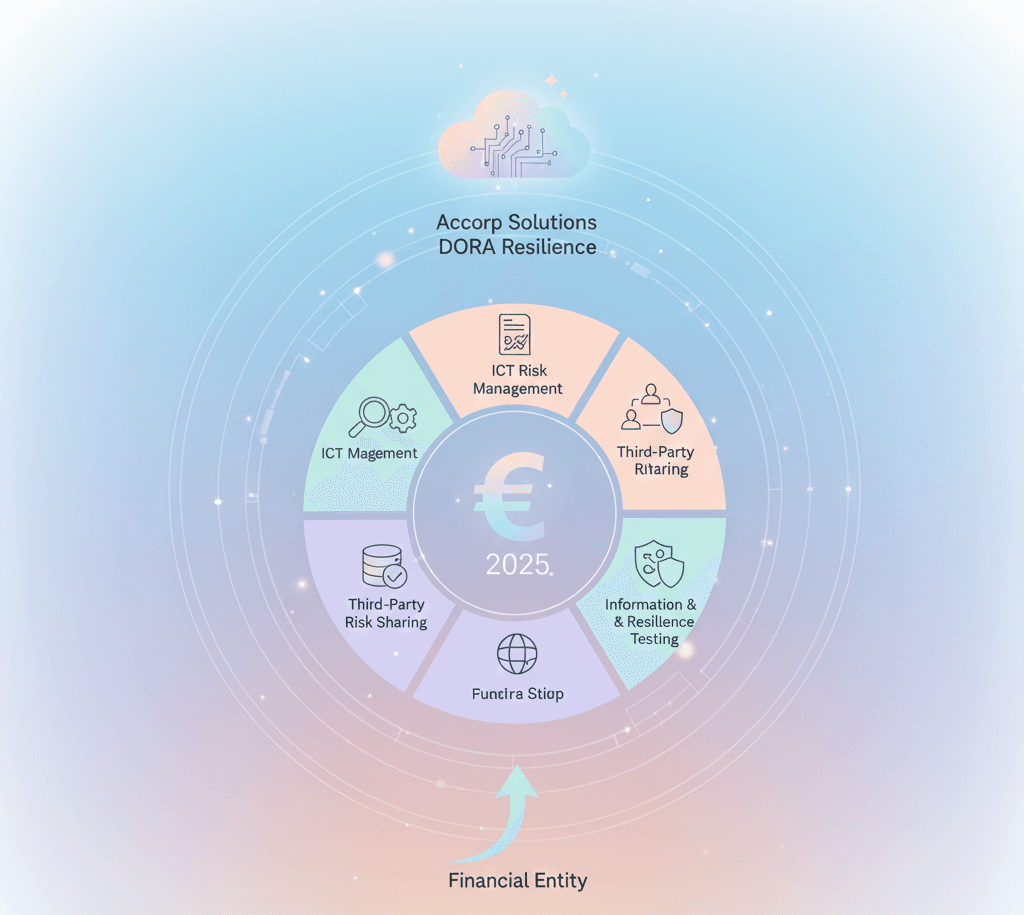
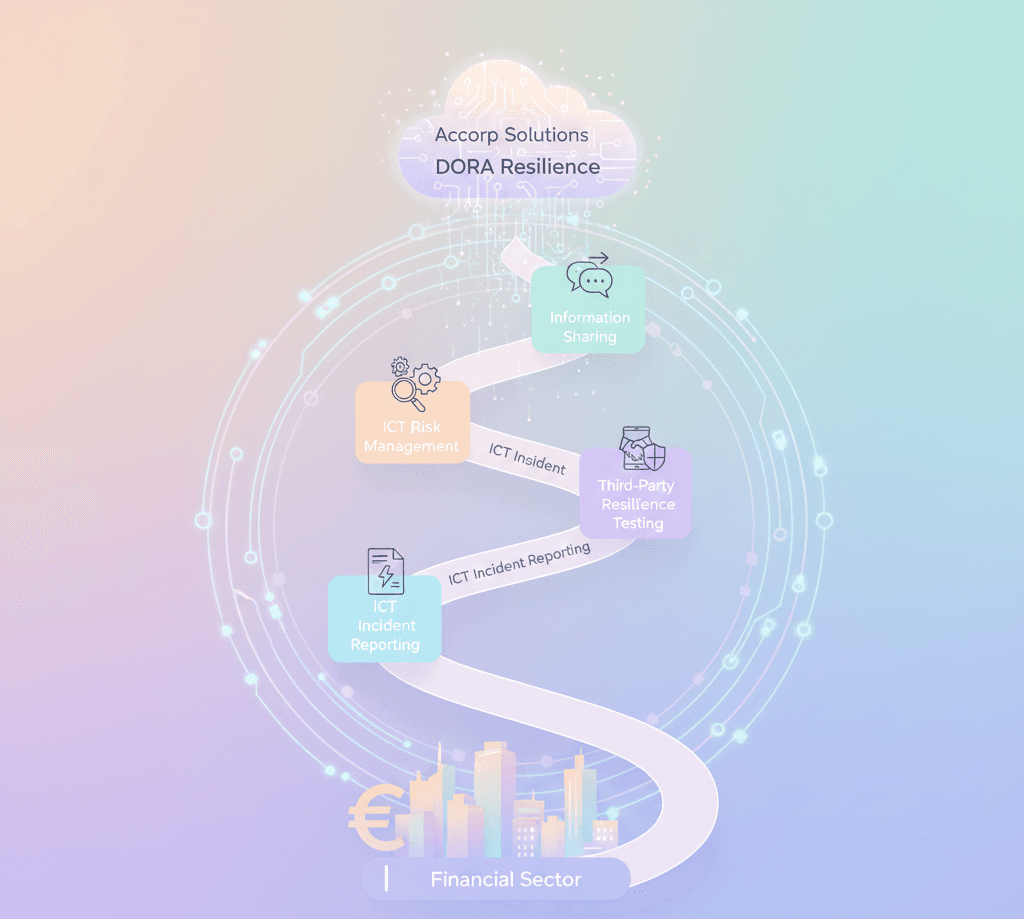
To comply with the Digital Resilience Operational Act, organisations must address five key areas:
1. ICT Risk Management
A robust framework for ICT risk management, DORA, is essential. Institutions must:
Identify and assess ICT risks
Implement governance controls
Use tools for real-time risk monitoring
2. ICT Incident Reporting
DORA introduces strict deadlines for ICT incident reporting:
Initial notification within 24 hours
Detailed report within 72 hours
Final report within 1 month
3. Digital Operational Resilience Testing
Simulate real-world cyber disruptions using:
Penetration testing
Scenario-based testing
4. Information & Intelligence Sharing
DORA promotes collaboration through cross-institution cyber threat intelligence sharing—enhancing proactive defence against coordinated attacks.
5. Third-Party ICT Risk Management
Organisations must evaluate and monitor third-party providers:
Run due diligence before onboarding
Include resilience obligations in contracts
Continuously monitor compliance
The Role of Critical ICT Providers
Critical third-party ICT service providers are expected to comply directly with DORA cyber security rules, including resilience testing and granular reporting. Financial entities should develop vendor oversight strategies for long-term DORA resilience.
Steps to Achieve DORA Compliance
To align with DORA:
Establish an ICT Risk Management Framework
Implement Incident Reporting Mechanisms
Conduct Resilience Testing
Build a Third-Party Risk Management Strategy
Create an Incident Response & Recovery Plan
DORA Compliance Checklist
Use this checklist to measure your DORA cyber readiness:
Conduct a DORA gap analysis
Determine if you're "critical" under Article 31
Centralise compliance documentation
Update ICT policies per evolving threats
Embed DORA requirements in vendor contracts
Schedule annual resilience tests
Why Accorp?
At Accorp, we specialise in empowering financial institutions to meet DORA compliance requirements efficiently and effectively.
Our services include:
DORA-specific risk assessments
EU-aligned cybersecurity audits
Third-party risk governance solutions
Incident readiness and simulation exercises
We don't just ensure compliance—we build future-proof DORA resilience.
Secure the Future with DORA Cyber Readiness
The Digital Operational Resilience Act is not merely a legal mandate—it's an opportunity to boost digital trust, enable transformation, and safeguard operations against growing cyber threats. With proactive preparation, you can thrive in the era of DORA cyber.